

Choosing the right picture frame involves more than just looks. You want the best protection for your art. Acrylic frames offer significant advantages over glass, providing superior durability, clarity, and UV protection. Many enthusiasts now consider acrylic options. Even major institutions see the key benefits; the National Gallery of Australia uses acrylic for about 90% of its touring paper-based art. Understanding these key benefits helps you make a great choice. This knowledge makes acrylic the preferred choice for framing enthusiasts seeking quality framing.
Key Benefits: Superior Durability and Safety

One of the most important key benefits of acrylic is its remarkable strength. You gain peace of mind knowing your cherished photos and artwork have superior protection. The inherent durability of acrylic makes it a top material for modern framing.
Shatter-Resistant Protection
You can worry less about accidental damage with acrylic. Unlike glass, acrylic sheets are shatter-resistant. This means if a frame is bumped or falls, it will not break into dangerous, sharp pieces. This quality offers fantastic protection for your art. High-quality acrylic sheets also provide good long-term scratch resistance.
The difference in impact resistance is significant.
Feature | Acrylic | Glass |
|---|---|---|
Impact Resistance | Unlikely to break, completely shatterproof | Easily damaged, sharp shards if broken |
Safety | Falls not a concern due to low weight | Potentially dangerous, could cut artwork |
Ideal for High-Traffic Areas
The durability of acrylic makes it perfect for busy environments. You will often see acrylic used in public spaces that require strong, reliable materials.
Museums, retail stores, and even airports choose acrylic for displays. These places need materials that can withstand constant public interaction. This preference highlights the key benefits of using acrylic for displays in active settings.
Safer for Kids and Pets
Your family’s safety is a top priority. Broken glass from a fallen picture frame can cause serious injuries. Using acrylic framing eliminates this risk. The material’s shatter-resistant nature makes it the safest choice for homes with curious children and playful pets. Because acrylic is so lightweight, it is less likely to cause harm if it does fall. This makes acrylic sheets a smart decision for nurseries, playrooms, and family rooms. You get all the beauty of a framed picture with added protection and security, which is one of the most valuable key benefits.
Lightweight and Easy to Handle
The impressive strength of acrylic is matched by its surprisingly light weight. This provides a level of convenience that traditional glass framing simply cannot offer. You will find that handling, hanging, and transporting your art becomes a much simpler task.
Simplified Transportation
You can move your framed art with greater ease and safety. The reduced weight of acrylic sheets makes carrying large pieces less of a struggle. This is especially helpful when you need to transport artwork in your vehicle. Safe transportation often involves a few key steps.
Measure your artwork and vehicle space first.
Use blankets to create buffers around the frame.
Secure the art to prevent it from sliding during turns or stops.
Following these steps is much easier with a lighter frame. The overall convenience of handling lightweight acrylic makes rearranging or moving your collection a breeze.
Reduced Strain on Walls
Heavy frames put significant stress on your walls. This can be a major concern, especially with certain wall materials.
Drywall lacks strength and requires finding a wall stud for support.
Plaster is fragile and can crack easily under a heavy load.
Using lightweight acrylic sheets for your framing significantly reduces this strain. An acrylic sheet can weigh less than half as much as a glass sheet of the same size. This dramatic difference makes hanging your art safer for your home.
Material | Weight (4' x 8' x 1/4" sheet) |
|---|---|
Acrylic | 46 pounds |
Glass | 96 pounds |
This weight reduction means you can hang larger pieces with more confidence and less specialized hardware.
Lower Shipping Costs
Shipping artwork can be expensive. Carriers often calculate costs based on "dimensional weight," which considers a package's size and weight. A large, heavy package will always cost more. Because acrylic sheets are so much lighter than glass, they can make your shipment more cost-effective. Choosing acrylic framing helps lower the actual weight of your package. This often results in lower shipping fees, whether you are sending a gift to family or shipping a piece to a buyer.
Enhanced Clarity: Acrylic vs. Glass
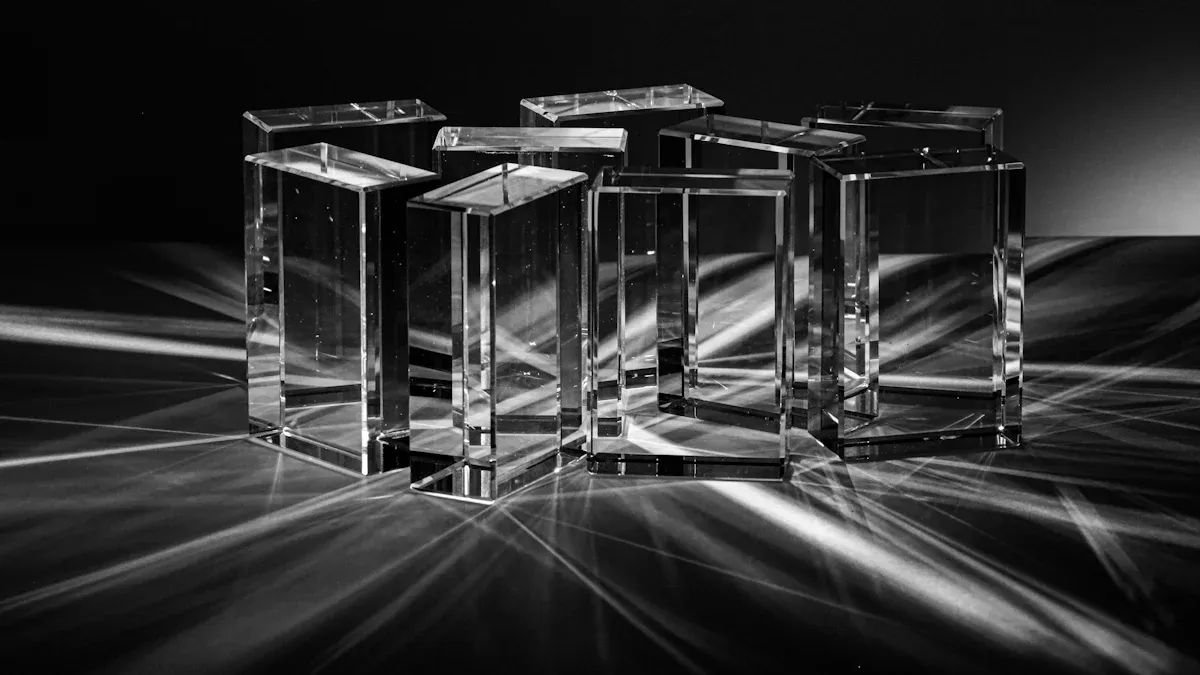
When you compare acrylic vs. glass, you will notice a major difference in visual quality. Your artwork deserves to be seen exactly as the artist intended. The exceptional clarity of acrylic framing ensures a true and vibrant display, free from the distortions common with traditional glass.
A Crystal-Clear View
You get a brighter, more vivid image with high-quality acrylic sheets. This material allows up to 92% of visible light to pass through, while standard glass transmits slightly less. This superior light transmission provides excellent clarity, making colors appear richer and more dynamic. Professional artists often choose acrylic for this reason.
They note that the material adds a sense of depth to the artwork, creating a stunning, almost three-dimensional effect. This level of clarity brings your photos and art to life.
No Green Tint
Standard glass often has a subtle green tint. This color comes from iron oxides present in the material. You can see this tint most clearly when you look at the edge of a glass pane. This faint greenness can slightly alter the true colors of your artwork, especially whites and other light tones. High-quality acrylic sheets do not have this issue. They are completely clear, ensuring that the colors you see are accurate and pure. This makes acrylic a superior choice for framing where color fidelity is important.
Reduced Glare and Reflections
Reflections can easily ruin the viewing experience of a beautifully framed piece. You can reduce glare and distracting reflections by choosing the right material. Manufacturers can treat acrylic with special matte finishes or anti-reflective coatings. These technologies help in a few key ways:
They scatter harsh light to soften reflections.
They improve visibility in brightly lit rooms.
They allow you to see the artwork clearly from different angles.
This feature is especially useful when you hang art near a window or under direct lighting, where glare is a common problem.
Essential UV Protection for Preservation
You want your cherished artwork and photographs to last a lifetime. Sunlight, however, contains invisible ultraviolet (UV) radiation that can cause irreversible damage. This is where UV-filtering acrylic provides essential protection for your pieces.
Preventing Art from Fading
Exposure to light can cause significant harm to your art. UV radiation provides the energy for chemical reactions that break down materials. This process, known as oxidation, can make paper yellow and brittle. You might notice vibrant colors, especially reds, begin to fade away, and even ink signatures can disappear over time. The following materials are especially vulnerable to damage from UV light:
Dyes used in colored paper and photos
Ink signatures and toners
This damage can dramatically reduce the beauty and value of your art.
How Acrylic Filters UV Rays
You can shield your art from this damage with the right material. High-quality acrylic sheets are specifically designed to block uv rays. Manufacturers add special UV absorbers into the material during production. These additives allow UV-filtering acrylic sheets to absorb approximately 98% of harmful ultraviolet light. Standard glass, in contrast, offers very little protection from the sun's damaging rays.
Long-Term Artwork Preservation
Choosing the right glazing is a key part of long-term artwork preservation. Art conservators recommend using materials that filter UV light to protect valuable pieces.
For archival framing, professionals suggest using glazing that offers a high degree of UV protection. This helps prevent adhesion and damage, ensuring the artwork's safety and stability for years to come.
Using UV-filtering acrylic sheets for your framing is a smart investment. This level of protection helps ensure your art remains vibrant and preserved for future generations to enjoy, potentially lasting for 80 years or more under typical display conditions.
You have seen the clear advantages of modern framing. Acrylic offers superior durability, lighter weight, enhanced clarity, and essential UV protection. These features make acrylic options an excellent investment for your art.
Major institutions like the British Museum trust acrylic for the protection of priceless artifacts. This makes it a smart choice for your own collection.
Choosing acrylic framing is a confident choice. You get top-tier aesthetic quality and safety for your most treasured pieces.
FAQ
How do you clean acrylic frames?
You can easily clean your acrylic frame. Use a soft microfiber cloth with mild soap and water. Gently wipe the surface to remove dust or smudges.
Important Tip: Avoid using harsh chemicals like ammonia or paper towels. These can scratch the surface or cause it to look cloudy.
Does acrylic turn yellow over time?
You do not need to worry about yellowing with high-quality acrylic. Modern acrylic sheets contain UV stabilizers that prevent them from turning yellow when exposed to sunlight. Your frame will remain crystal clear for many years, unlike some cheaper plastics that can discolor.
Is acrylic more expensive than glass?
Acrylic can sometimes have a higher initial cost than standard glass. However, you get superior durability, UV protection, and lighter weight. These features provide excellent long-term value by protecting your art from damage, making it a worthwhile investment for treasured pieces.
Can you recycle acrylic frames?
Yes, you can recycle acrylic. Acrylic is a thermoplastic, which means you can melt it down and reform it for new uses. This makes it a more environmentally friendly choice compared to materials that cannot be easily repurposed. ♻️
See Also
Discover Why an Acrylic Coffee Table Elevates Your Living Room
Styling Your Modern Home with Elegant Clear Acrylic Trays
Ten Chic Ideas to Redefine Your Space Using Acrylic Trays
Exploring Round Acrylic Trays: Designs and Practical Home Applications
